Ozawa Lamp
Assignment:
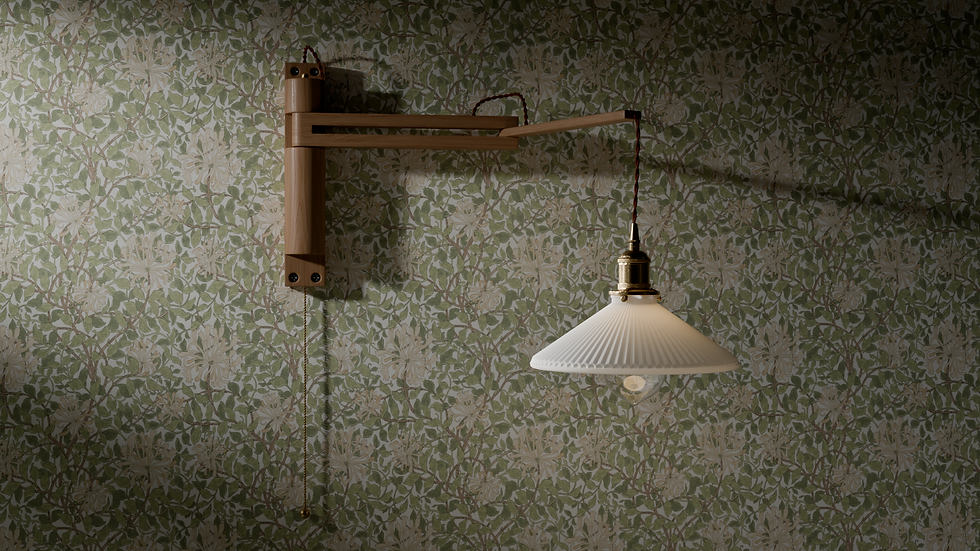
Modell and texture a product of choice. Animate close ups to showcase the texture.


Process, Details and Learnings
Software
Blender
Davinci Resolve
References
.jpg)
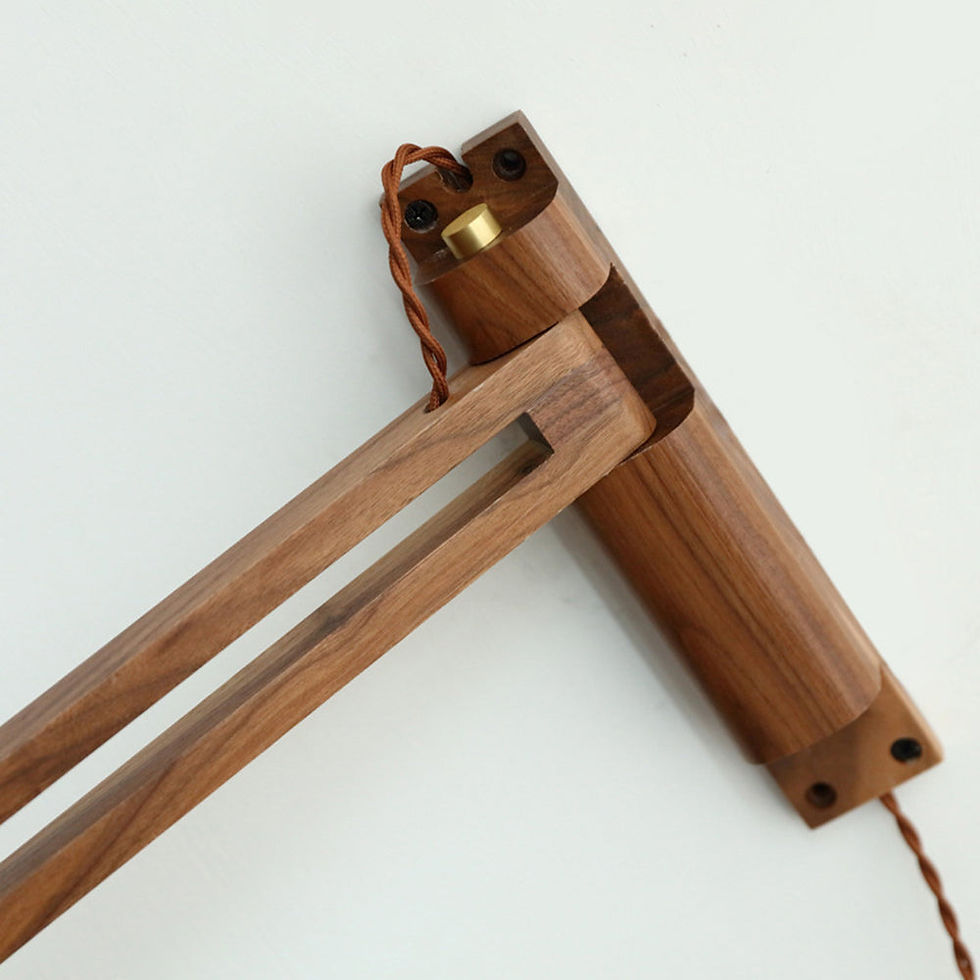
The wooden arm is what drew me to choose this wall lamp, due to its strong potential for animation. This was also the first time I combined modelling, texturing, and animation in a single project.

Challenges
.jpg)
I ran into some issues when creating the lampshade. Initially, I tried to build it by extruding a cylinder, but this made it difficult to control and refine the overall shape. I also experienced performance issues, as subdivision on such a detailed form significantly slowed Blender down.
The solution to both problems was to use an Array Modifier, which gave me better control over the structure while optimizing capacity.
Learning key-points
This project taught me the importance of maintaining a structured workflow in Blender, both at an overall level and within individual meshes. In particular, working on the patterned ring on the lampshade showed how quickly complex subdivision-based geometry can become difficult to control and inefficient to work with. This experience reinforced the value of planning clean, simple topology, as it makes future adjustments easier and keeps the modelling process more manageable.
I also developed a better grasp of the Shader Editor, particularly in adjusting downloaded materials. This included tweaking the wood texture on the arm by refining roughness, normal maps, and using a mapping node for better control.